THE EU'S NEW AML FRAMEWORK: WHAT IS CHANGING AND WHAT YOU NEED TO KNOW
- Everett Morgan

- Apr 12
- 5 min read
If you run AML compliance in a financial institution operating in the EU, July 2027
needs to be at the top of your priorities. That is when the EU's Anti-Money
Laundering Regulation (AMLR), the Sixth Anti-Money Laundering Directive, and the
EU's central beneficial ownership and bank account registers all go live. This article
sets out what is changing, why it matters, and what your compliance team needs to be
doing right now.
What Is Changing
A Single Rulebook
Previously, EU AML obligations were set out in Directives. Each member state had to
transpose those Directives into national law. That step introduced variation, resulting
in different definitions, thresholds, and supervisory expectations. Some national
implementations were stricter. Some were more permissive. For firms operating
across borders, that meant maintaining parallel compliance frameworks and
navigating conflicting requirements. The standard applied to your firm depended
heavily on where you were supervised. Regulators across the EU were not working
from the same baseline, making consistent enforcement impossible.
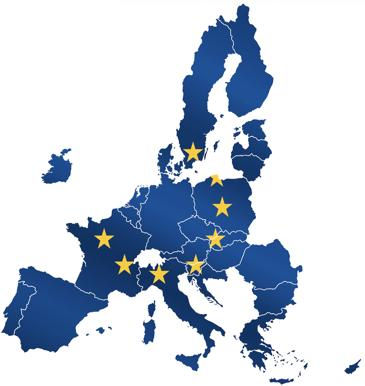
The AMLR removes those variations. It takes the form of a Regulation, not a Directive, so it applies uniformly across all 27 member states. No transposition subject to national interpretation. The text that applies in Frankfurt applies in Dublin, Madrid, and Bucharest in exactly the same way. Finding the easiest jurisdiction to operate in is no longer an option.
Your current compliance framework needs to be benchmarked against the AMLR text
itself, not against the national rules your policies were built around. Where those
national implementations fell short of what the Regulation now requires, the gap is
yours to close.
The Anti-Money Laundering Authority (AMLA)
AMLA matters to your firm whether or not you fall under its direct supervision. It will
become fully operational in 2028 and will directly supervise 40 of the EU's highest-
risk financial institutions, based on cross-border footprint and risk profile. The
selection process starts in mid-2027. That number is fixed for now, but the framework
is designed to grow. Firms outside the initial scope should not treat that as a
permanent position.
Additonally, AMLA will hold binding powers over directly supervised entities and will
coordinate and oversee national regulators and Financial Intelligence Units across the
EU. Supervision will be more consistent across member states than anything firms
have experienced under the previous regime.
National regulators will remain the principal supervisor for the vast majority of firms,
but they will be operating within a framework that AMLA sets and monitors. AMLA
has been explicit that it expects board-level oversight and independent challenge from
the firms it supervises, and national regulators will be applying the same standard. If
your governance structure cannot demonstrate that today, it needs to change.
For smaller firms outside AMLA's direct scope, supervision is unlikely to change
immediately. The more pressing issue is commercial. Larger banks and payment
partners are already raising the standards they expect from the firms they work with,
and access to banking infrastructure, payment networks, and partnerships will
depend on demonstrable compliance with the new framework.
Beneficial Ownership Registers
EU-wide beneficial ownership and bank account registers go live in 2027. When they
do, regulators will be able to check your due diligence in real time. The defence firms
have historically relied on, that they asked the right questions, documented the
answers, and had no reason to doubt the client, becomes much harder to run when the
underlying data is independently accessible. Gaps between what a client told you and
what the register shows will be visible immediately.
Your systems need to connect to these registers before they go live, and your beneficial
ownership verification methodology needs to be built around independent
corroboration. Client declarations alone will not be sufficient. Firms unable to
demonstrate independent verification will find it very difficult to defend their due
diligence to a regulator who has access to the data in real time.
Crypto and Payment Transparency: Already in Effect
The Transfer of Funds Regulation is already in force. The rules requiring full
traceability for crypto-assets and payment transactions are live now, not something
firms are working toward. If your institution handles either and is not meeting ToFR
standards today, your firm is already afoul of the rules.
For CASPs, the regulatory direction has been consistent for several years. Firms that
treated crypto-asset regulation as something to monitor rather than act on are now
operating with a real gap to close.
Timeline
2025
The EBA's AML mandate transferred to AMLA on 31 December 2025. Before that
transfer, the EBA launched a public consultation in March 2025 on four draft
Regulatory Technical Standards: risk profile assessment of obliged entities, selection
criteria for direct AMLA supervision, customer due diligence requirements, and
financial penalties and administrative sanctions. The EBA submitted its response to
the European Commission's Call for Advice on 30 October 2025.
2026: The Position Now
AMLA is consulting on most standards through the first half of 2026, with
consultation periods closing by May 2026. Firms can submit responses to open
consultations directly via the AMLA website, and doing so is a practical way to track
where standards are heading before they are finalised. AMLA will then submit its
detailed rules, reporting standards, and guidelines to the European Commission by 10
July 2026, and the Commission is expected to adopt and endorse those standards
before 10 July 2027, when the AMLR enters into force.
Waiting for final standards before acting is a mistake. The core obligations are already
in the AMLR text. CDD requirements, beneficial ownership verification standards,
and transaction monitoring governance are set out in enough detail to act on now.
Waiting for final standards before starting a gap analysis leaves less than 12 months to
fix what you find.
Three things need to be on your agenda now.
Gap analysis. A structured comparison between your current framework and what the
AMLR requires, covering CDD standards, transaction monitoring governance,
beneficial ownership verification methodology, suspicious activity report quality and
decision-making, and your risk assessment approach.
Technology. Can your systems connect to the EU beneficial ownership and bank
account registers? Can they handle real-time screening at volume? Can they produce
audit-ready records without weeks of manual work?
Governance. AMLA expects board-level oversight and independent challenge. If your
current governance structure cannot demonstrate that, it needs to change before an
inspector asks about it.
July 2027
Everything goes live: the AMLR, AMLD6, and the central registers. Being compliant at
that point means policies that reflect the new standards, systems that connect to the
required infrastructure, trained staff, and documentary evidence to show a regulator.
2028
AMLA will take on direct supervisory responsibility, and inspections will become
more rigorous and consistent across the EU. AMLA has signalled that its inspection
method will be evidence-based, so inspectors will want to see that controls work in
practice, not just that they exist in policy.
The Window Is Closing
The firms that are ahead completed their gap analyses in 2025. They are upgrading
their technology now, building governance frameworks this year, and treating July
2027 as a fixed point.
The firms waiting for final standards, assuming their current practices are close
enough, or planning to act in late 2026 will be racing against the clock with very little
room for error. The core obligations are clear enough to act on now. The firms that
move first will have the time to fix what they find.
If you want to understand where your framework stands today, I am happy to talk.
Everett Morgan | Independent Financial Crime Advisory |morgan@claritasrisk.com
| Former VP, Anti-Financial Crime, Deutsche Bank | ICA Dip(AML) | Dip(FinCrime)
| 20 years Tier 1 bank AML experience
Comments