
Regulatory Readiness & Inspection Support
“Would we withstand regulatory scrutiny?”
Prepare with confidence before the regulator arrives.
Independent regulatory readiness work that helps firms understand how their financial crime controls are likely to withstand supervisory scrutiny, with practical recommendations to strengthen governance, controls and documentation before an inspection.
The question behind the engagement.
Regulatory inspections are no longer about policies and procedures. Supervisors expect firms to demonstrate that financial crime controls are operating in practice, evidenced through governance, decision-making and ongoing oversight.
Most organisations only find the weaknesses when they are responding to regulatory questions, document requests or interviews with senior management. By then, the room to address them has narrowed.
Preparing in advance gives firms time to identify the issues quietly, strengthen the right controls and approach supervisory engagement from a position of confidence.
Our role is not to predict what a regulator will ask. It is to look at your organisation through the same practical lens an experienced supervisor will apply.
Judgement, not a checklist.
We read the documents the regulator is most likely to request: the BWRA, the AML policy suite, the last cycles of Board and MLRO reporting, the financial crime committee minutes and the supporting risk registers. We test the supporting evidence and identify the points where the documentation has drifted from how the controls actually operate.
We sample customer files, transaction monitoring alerts and SAR cases, sit with the MLRO and the Senior Manager accountable for financial crime, and work through the questions a supervisor would ask in interview, including the ones where the answer needs more work.
We help the firm rewrite the materials that need rewriting before they are submitted, prepare senior management for the regulator interviews, sit through the dry runs and brief the Board on what the firm is being asked, what it is saying and what to expect next.
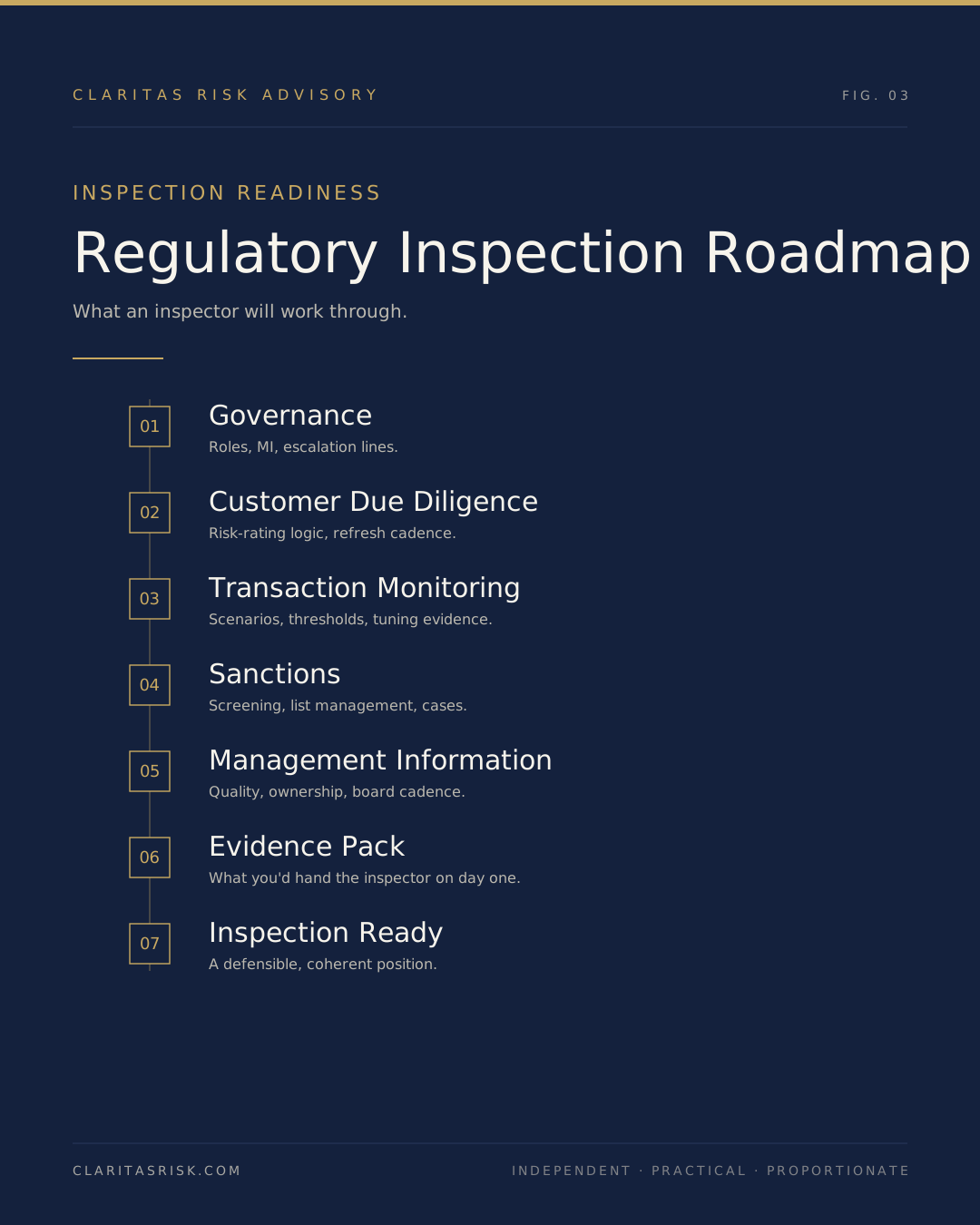
What an inspector will work through.
Inspections rarely surprise the well-prepared. The roadmap below sets out the sequence supervisors typically follow, and the evidence each stage will demand.
After the engagement.
- –Executive Summary
- –Regulatory Readiness Perspective
- –Gap Analysis
- –Risk Prioritisation
- –Document Review
- –Practical Recommendations
- –Executive Briefing
- –Readiness Roadmap
- Who it's for
- Payment Institutions
- Electronic Money Institutions
- Investment Firms
- Asset Managers
- Wealth Managers
- Crypto Asset Service Providers
- Corporate Service Providers
- Typical duration
- Two to six weeks.
- Delivery
- Remote, on-site or hybrid.
- Primary output
- Independent readiness perspective and practical regulatory preparation plan.
- Ideal when
- Preparing for regulatory inspections, supervisory visits, authorisations or significant business change.
- 01We read the documents the regulator is most likely to request: the BWRA, the AML policy suite, the last cycles of Board and MLRO reporting, the financial crime committee minutes and the supporting risk registers.
- 02We sample customer files, transaction monitoring alerts and SAR cases, sit with the MLRO and the Senior Manager accountable for financial crime, and work through the questions a supervisor would ask in interview, including the ones where the answer needs more work.
- 03We help the firm rewrite the materials that need rewriting before they are submitted, prepare senior management for the regulator interviews, sit through the dry runs and brief the Board on what the firm is being asked, what it is saying and what to expect next.
“Inspections do not test policies. They test whether the people in the room can evidence what the policy claims is happening.”
A few considered answers.
The new European AML framework represents one of the most significant changes to anti-money laundering regulation in decades. Preparing early enables firms to identify governance and control gaps, strengthen financial crime frameworks and implement improvements before supervisory expectations increase.
We provide an independent assessment of your existing framework while considering the direction of the new European AML regime. The result is a practical roadmap that helps strengthen governance, customer due diligence, transaction monitoring and financial crime oversight.
Yes. The most effective time to identify weaknesses is before a regulator does. Early preparation gives organisations time to strengthen controls without the pressure of a live supervisory inspection.
Regulators commonly focus on governance, enterprise-wide risk assessments, customer due diligence, beneficial ownership, transaction monitoring, suspicious activity reporting, record keeping, staff training and senior management accountability.
Yes. Our readiness engagements simulate the areas regulators typically examine and provide an independent perspective on where your organisation is well prepared and where improvements should be prioritised.
Ready for regulatory scrutiny?
The strongest inspections are often those where preparation began long before the regulator arrived.